A multi-tenant CMS for Slovak artists, where a new portfolio website goes live on its own domain in about an hour and the artist runs it alone from then on.
PSU
01 / Overview
From one artist's website to a portal for many
It began with a single request. A Slovak artist needed somewhere to show their work and had nothing at all: no website, no portfolio, no link to send a gallery or a collector. Before designing anything, I studied how established artist and gallery websites are actually structured, because a portfolio for an artist follows different conventions from a portfolio for a studio.
That first website became a template, and the template became PSU (Portál slovenských umelcov). Each artist gets an independent website on their own domain, while one shared Slovak-language CMS lets them add works, images, audio, video, a CV and contact details without involving anyone else. I designed and built every part of it alone: the product, the administration interface, the API, the artist frontends and the deployment.
02 / Challenge
Simple enough to be used, structured enough to scale
The artists had never used a content system. If adding a new work or correcting a date required a developer, the website would stop being updated within weeks and quietly go stale, which is exactly the outcome a portfolio cannot afford.
One website for one artist would not have solved the wider problem either. Every new artist needed a separate deployment, domain and content set while sharing a single codebase and administration, so nothing artist-specific could be hardcoded and onboarding a new artist could not mean rebuilding the product.
Reference study
Learning the conventions before designing them
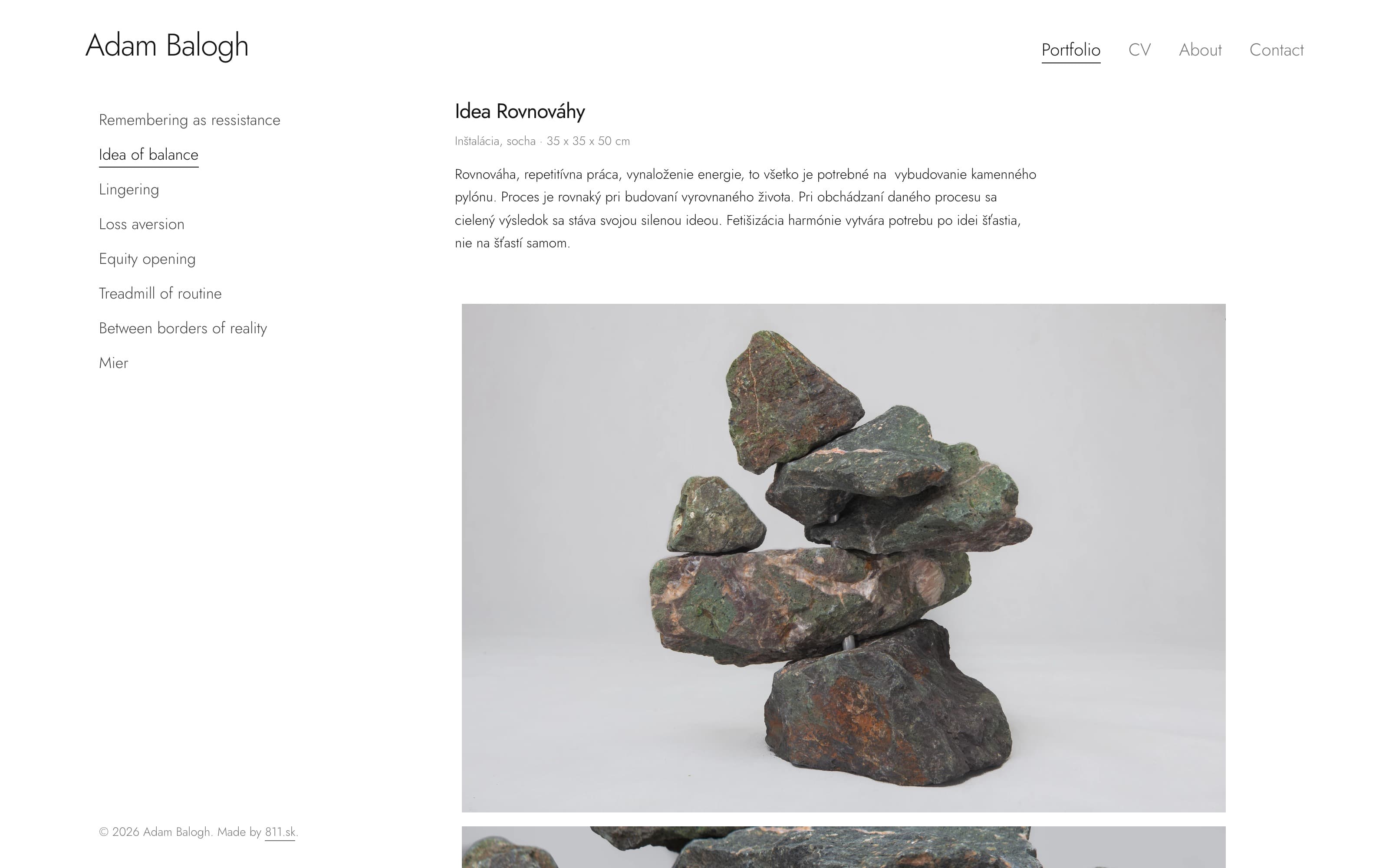
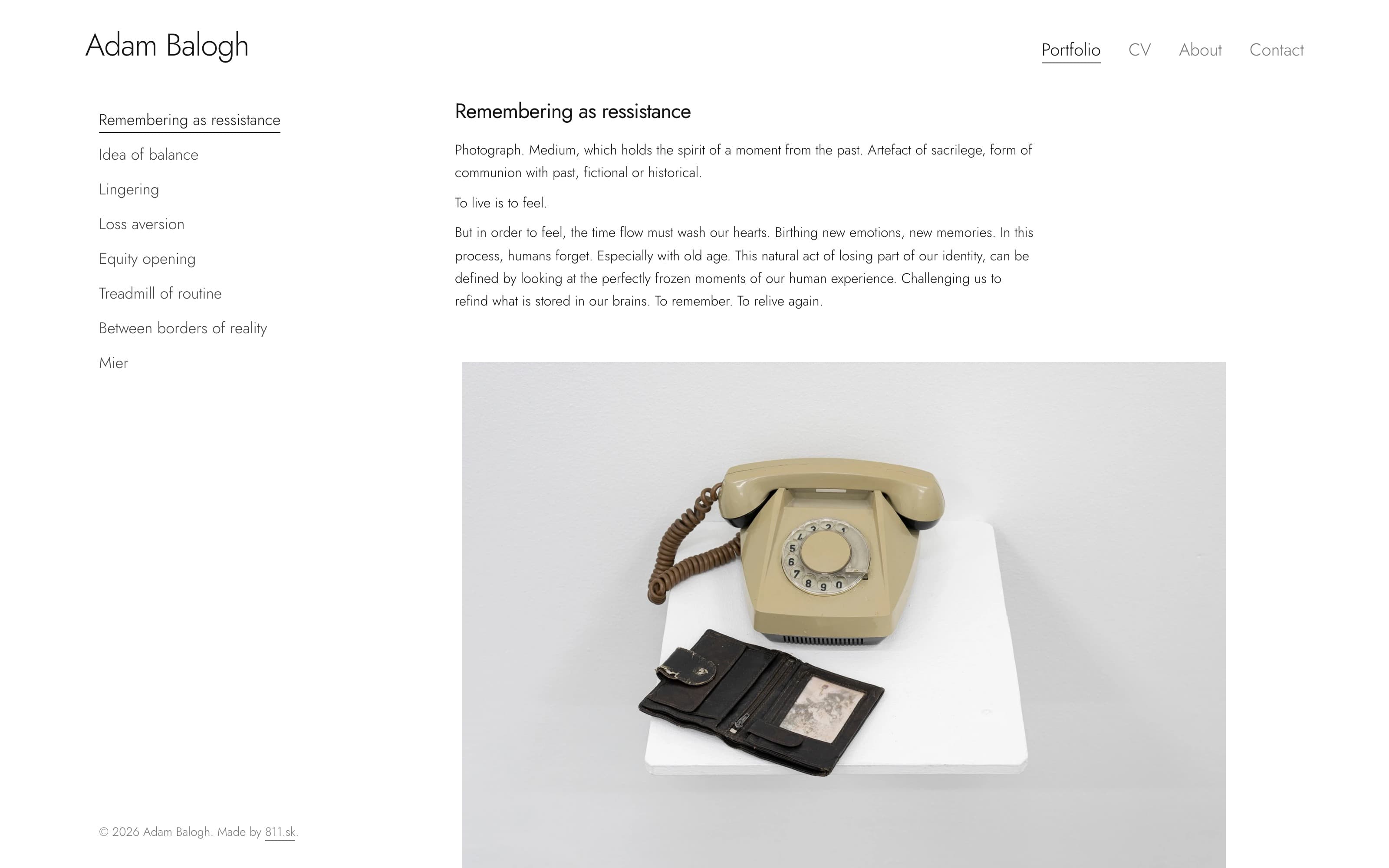
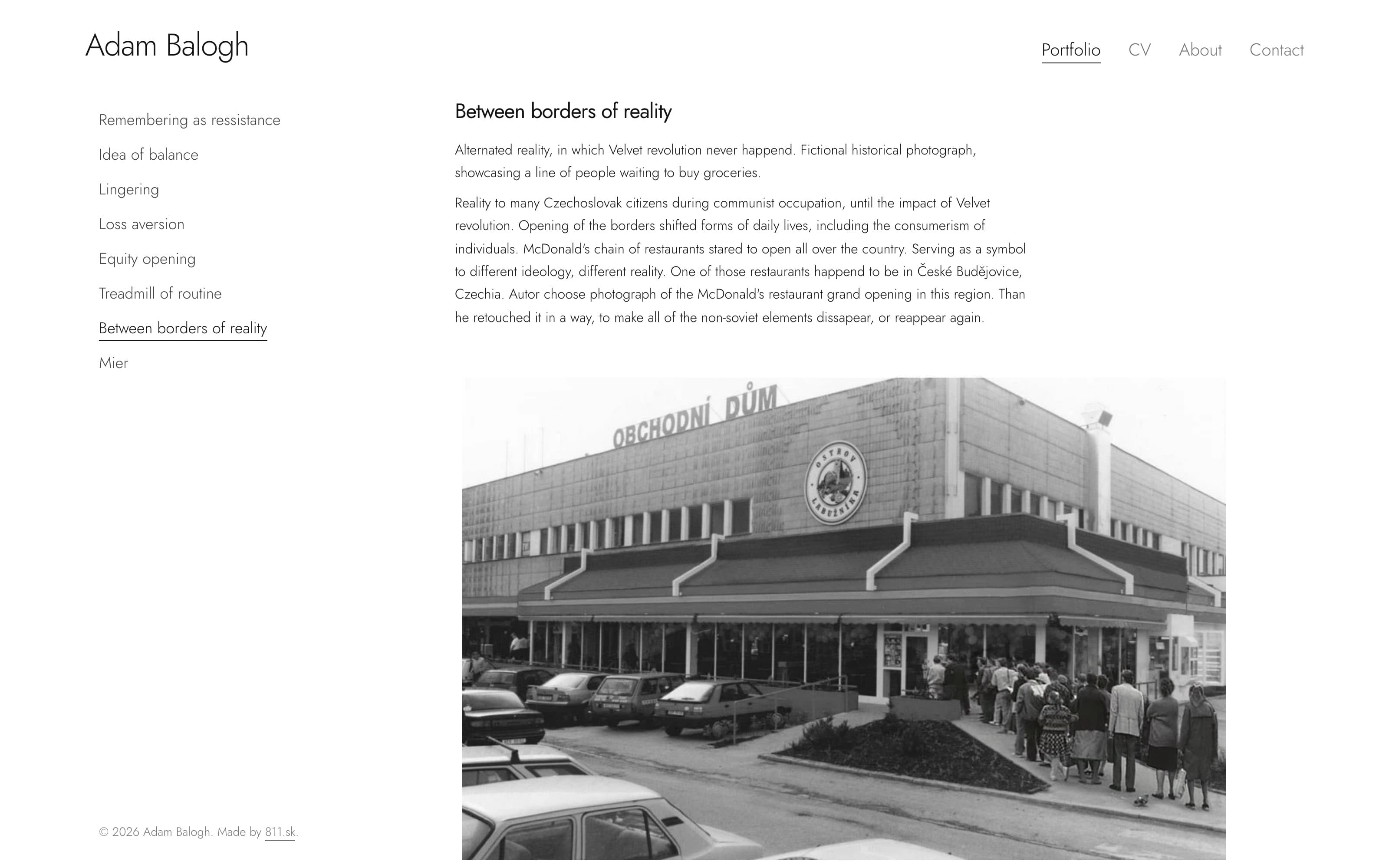
Artist websites follow their own quiet rules: a persistent works list, restrained typography, artwork metadata beneath each piece, and the CV, statement and contact pages curators expect to find. These references shaped the information architecture before the first screen was drawn.
03 / Approach
One CMS, one template, independent websites
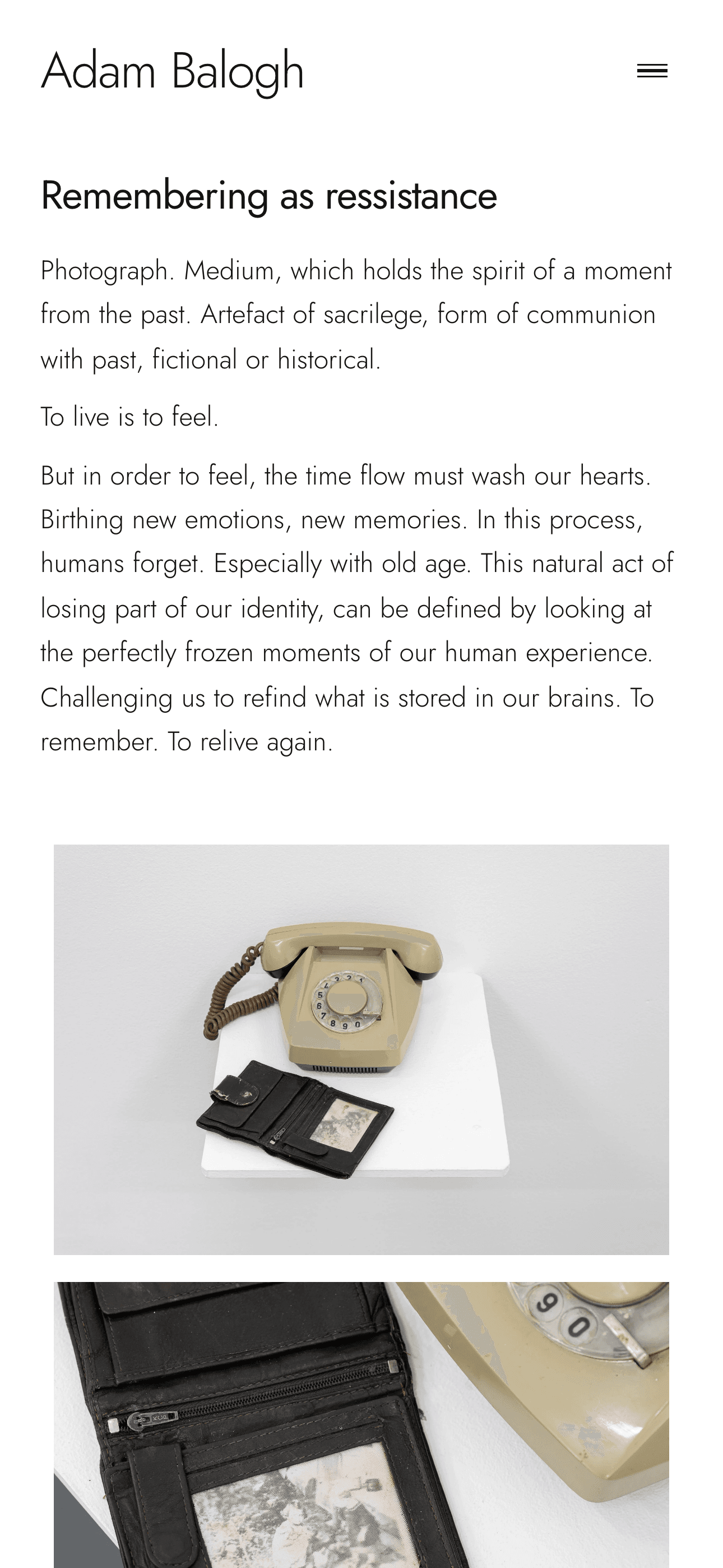
Every artist website is its own Next.js deployment on its own domain, cloned from a single configurable template: the entire per-artist difference lives in one config file, so nothing about a specific artist is written into the code. Content never leaves the CMS: each site reads only its own published works and pages through a read-only, key-gated API, and that key stays server-side and never reaches the browser. Inside the Slovak administration an artist writes rich text, uploads images and audio directly to object storage, embeds Vimeo or YouTube, records date, medium and dimensions, pins the works that should lead and hides the rest. Saving a change pings the artist's website to revalidate, so the public page updates in seconds instead of waiting for the next deployment.
04 / Results
A portfolio in an hour, then run by the artist
PSU is live. The first artist portfolio is in public use with its works, CV, statement and contact pages published and maintained by the artist, and a second site is deployed and being filled. The clearest outcome is time and independence: an artist goes from having nothing to a live portfolio in about an hour, and every change after that is made without a developer.
~1h
From nothing to a live portfolio
A new site is cloned from the template, configured in one file, connected to its own read-only CMS key and deployed on its own domain in about an hour.
01
Config file per artist
Everything that differs between artists lives in a single configuration file, so the codebase, API and administration stay shared and nothing is hardcoded per site.
04
Media types in one work
Images, audio, Vimeo and YouTube sit alongside rich text, date, medium and dimensions inside a single work record the artist controls.
Client perspective
“Adam takes a highly responsive and responsible approach to his work. He handles custom requirements with precision.
He personally gave me several suggestions that helped take the website to the next level. He is a true professional, and I would definitely recommend him.”