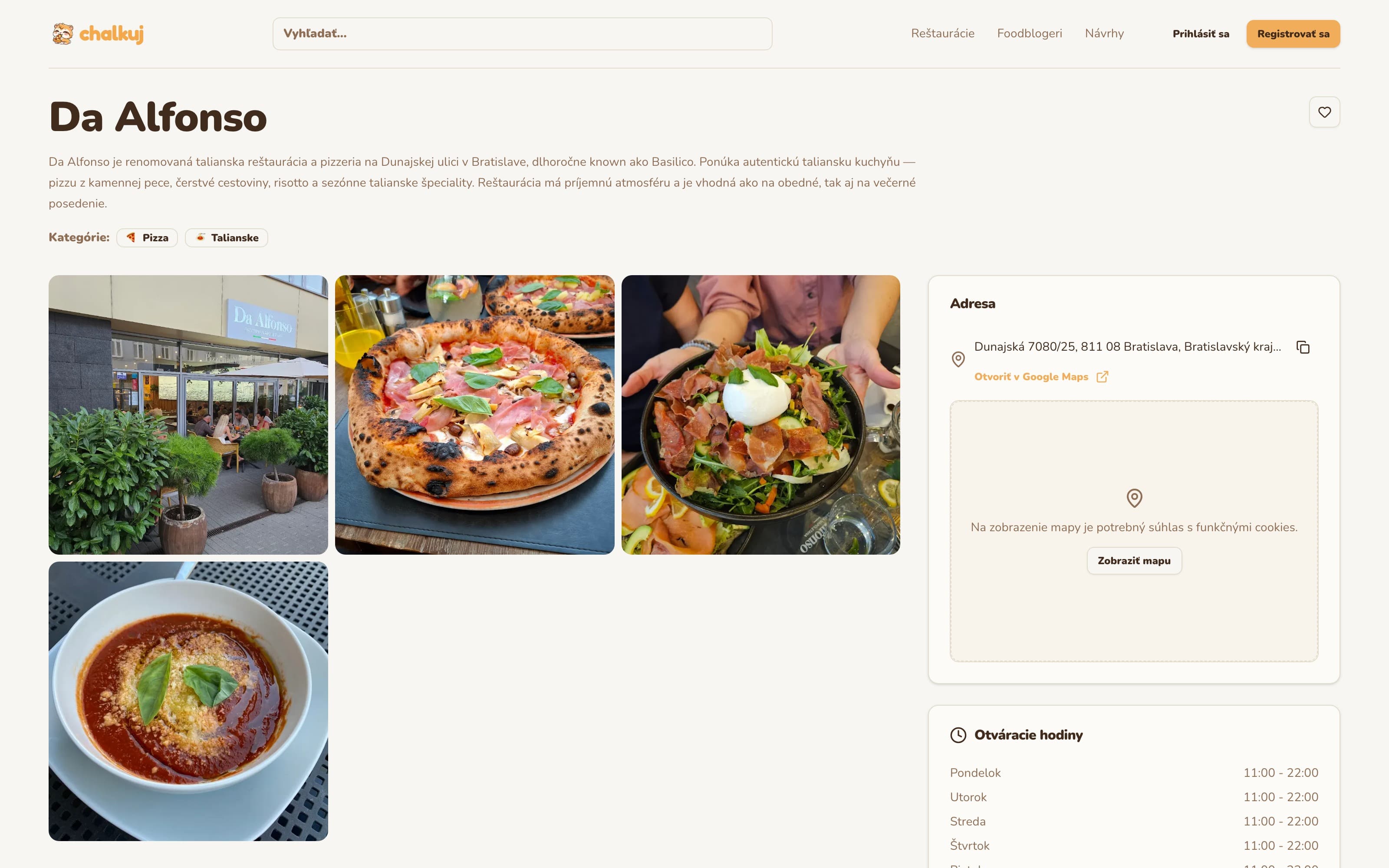
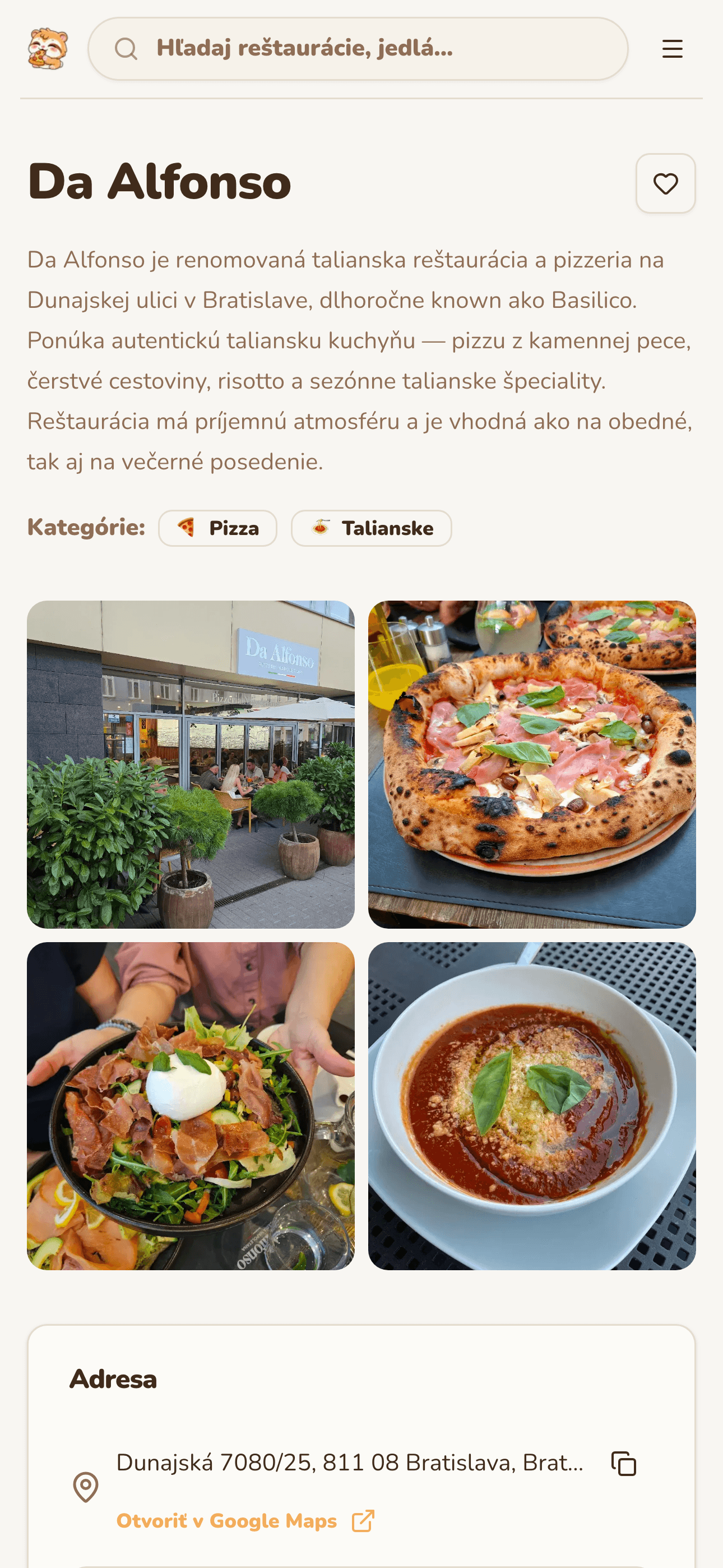
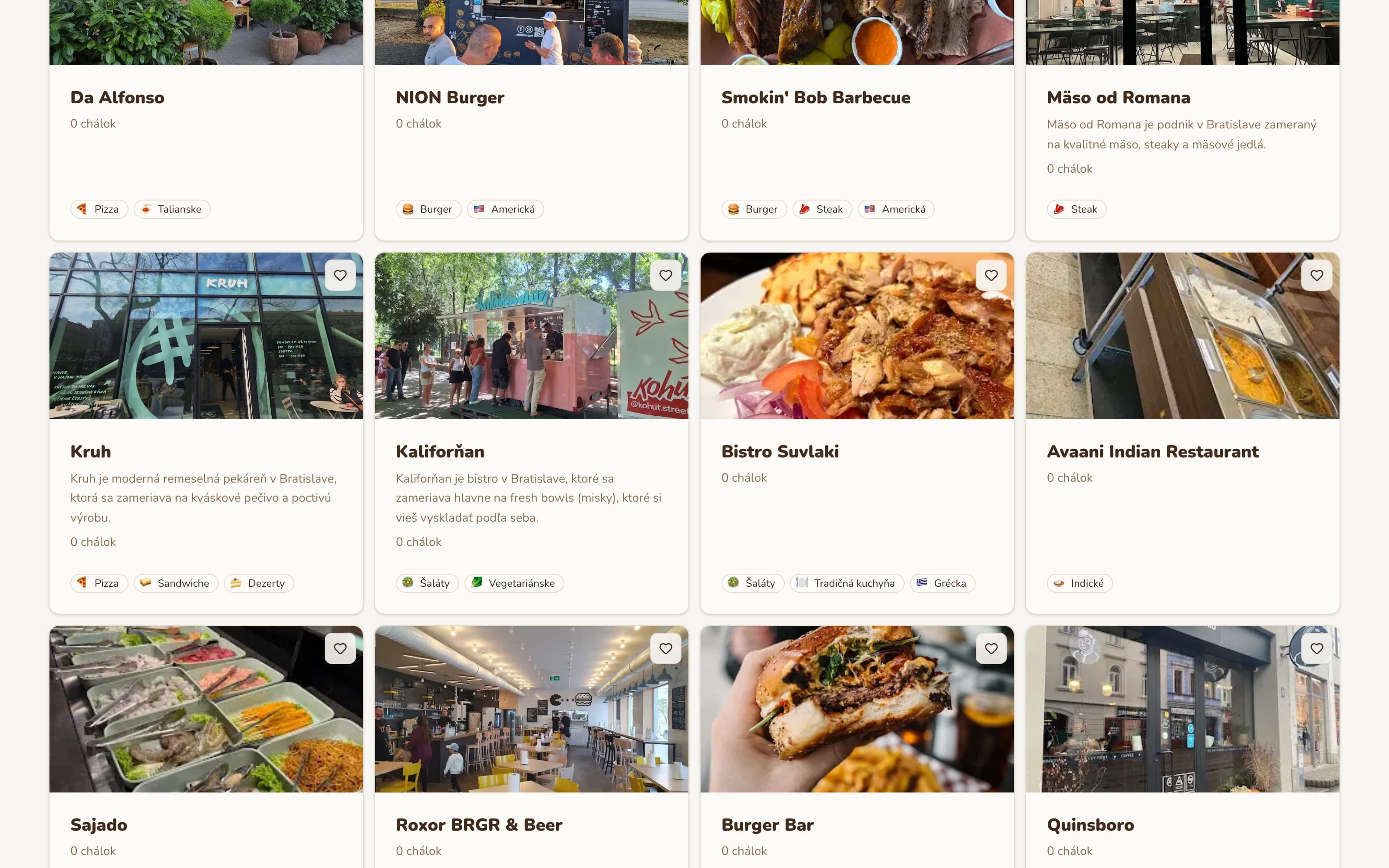
A restaurant discovery platform built around verified food bloggers, with map-first search, allergen-aware food data and ratings counted in "chálkas" rather than anonymous stars.
Chalkuj
01 / Overview
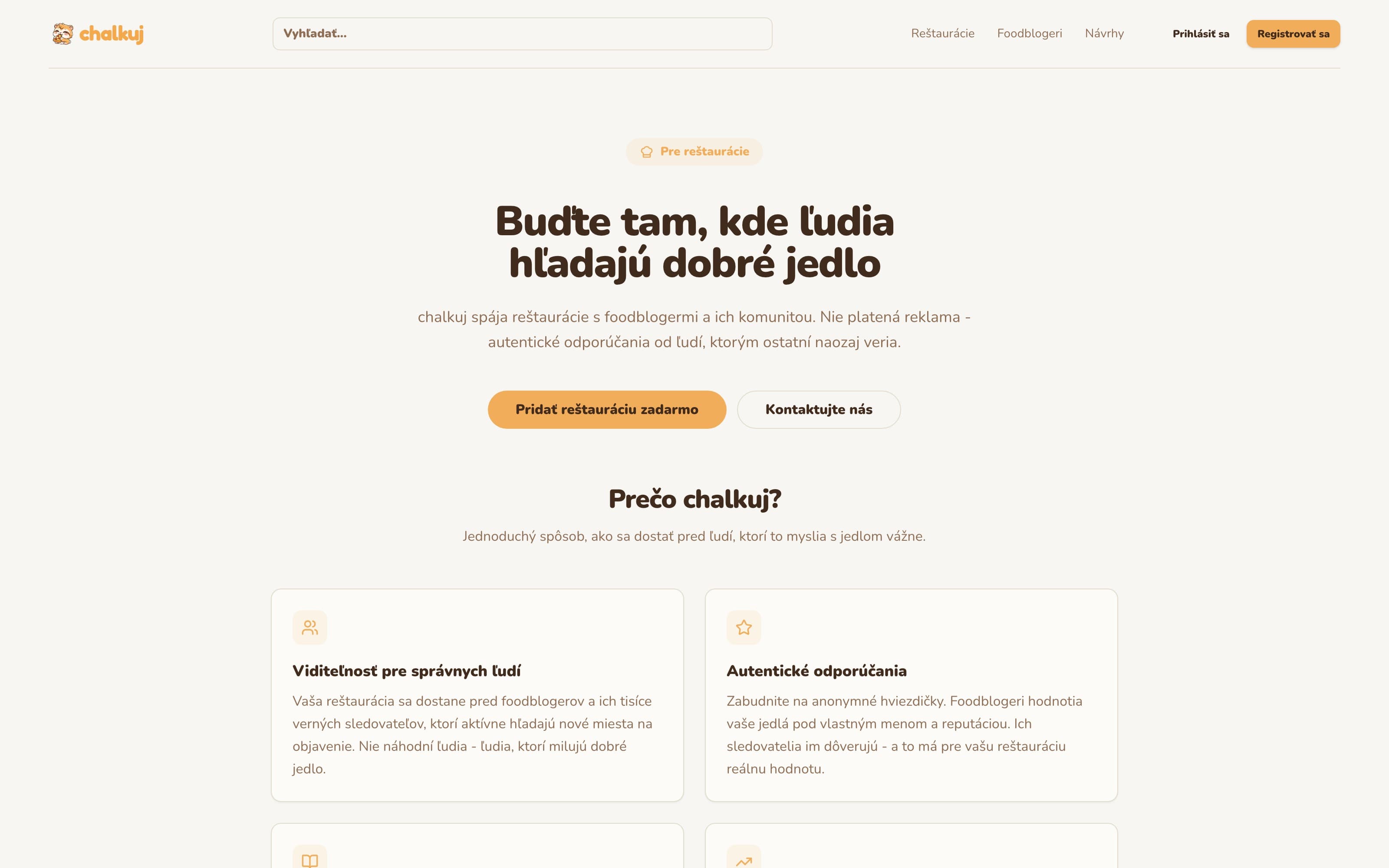
Recommendations with a name attached
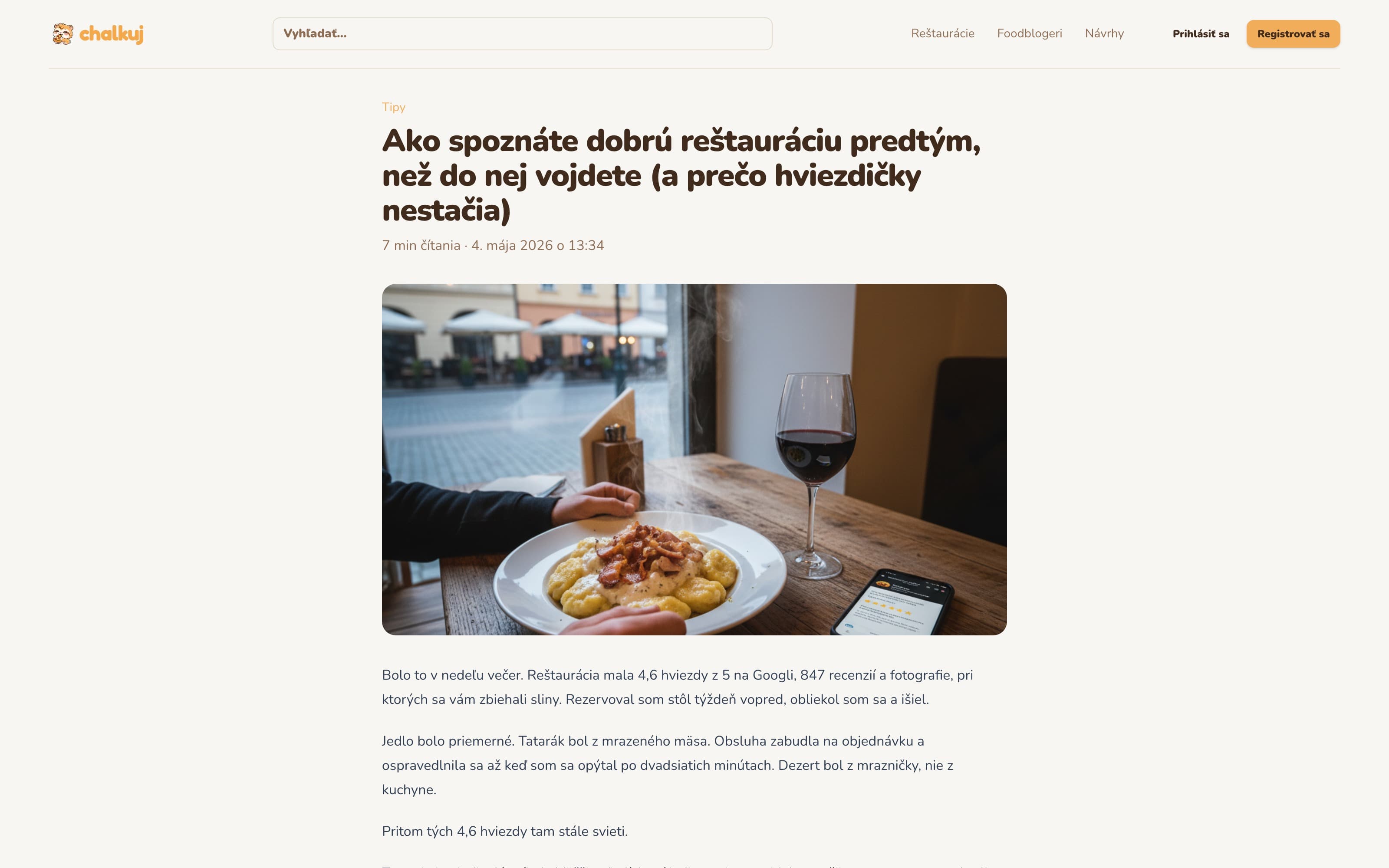
Restaurant ratings usually arrive as anonymous averages: five stars from accounts nobody can check, attached to reviews nobody signs. Chalkuj starts from the opposite idea. A recommendation is worth more when the person behind it reviews food publicly, under their own name and reputation.
The platform began as my bachelor's thesis, "Mapa chutí", and grew into a live product. I designed and built all of it alone: the product and brand direction, the Next.js web platform, the NestJS API and background worker, the administration and the React Native mobile app.
02 / Challenge
The gap between map services and food blogs
The thesis began by analysing five existing services, from global review platforms and map services to local food blogs and listing sites. None of them combined verified reviewers with an interactive map, food-level categorisation and author profiles; that missing combination became the product definition.
One system then had to serve three audiences without confusing any of them. Diners search, filter by allergens, save favourites and suggest venues. Food bloggers add venues and publish signed reviews. Administrators curate categories, allergens and accounts, each within one role-aware platform.
03 / Approach
Three roles, one map, chálkas instead of stars
Venues live on an interactive Mapbox map with geocoded addresses, cuisine categories, hashtags, galleries and per-dish allergen data. Search runs through Elasticsearch, so a misspelled venue name still finds the right place; Redis caches repeated queries and a BullMQ worker handles the heavy jobs away from requests. Reviews written by verified bloggers carry a dedicated flag, and ratings are counted in "chálkas" (the platform's own playful unit), a deliberate step away from the anonymous star average. The React Native mobile app shares the same API and is distributed as an internal Expo build. Before launch, a security audit against the OWASP Top Ten found and fixed three real vulnerabilities, from an unauthenticated upload endpoint to missing security headers, and sign-in attempts are rate limited.
04 / Results
Launched with real venues, tested like a product
Chalkuj is live with venues verified by food bloggers and an editorial blog alongside the map. The thesis origin gave the launch unusual rigour for a side project: the security suite and structured user testing both passed in full before the public release.
15+
Blogger-verified venues
Every venue on the map was added or approved through the verified food-blogger workflow rather than scraped from a directory.
72
Security checks passed
Sixty OWASP-methodology integration tests and twelve Playwright end-to-end scenarios all pass; the pre-launch audit surfaced and fixed three real vulnerabilities.
13/13
User-testing tasks completed
Five testers completed the full journey from registration to a published review, with no blocking errors across any task.