A custom e-commerce system that moved three stores and 7,899 products from a rented platform onto one shared backend.
Záhradné
01 / Overview
One commerce backend for three stores
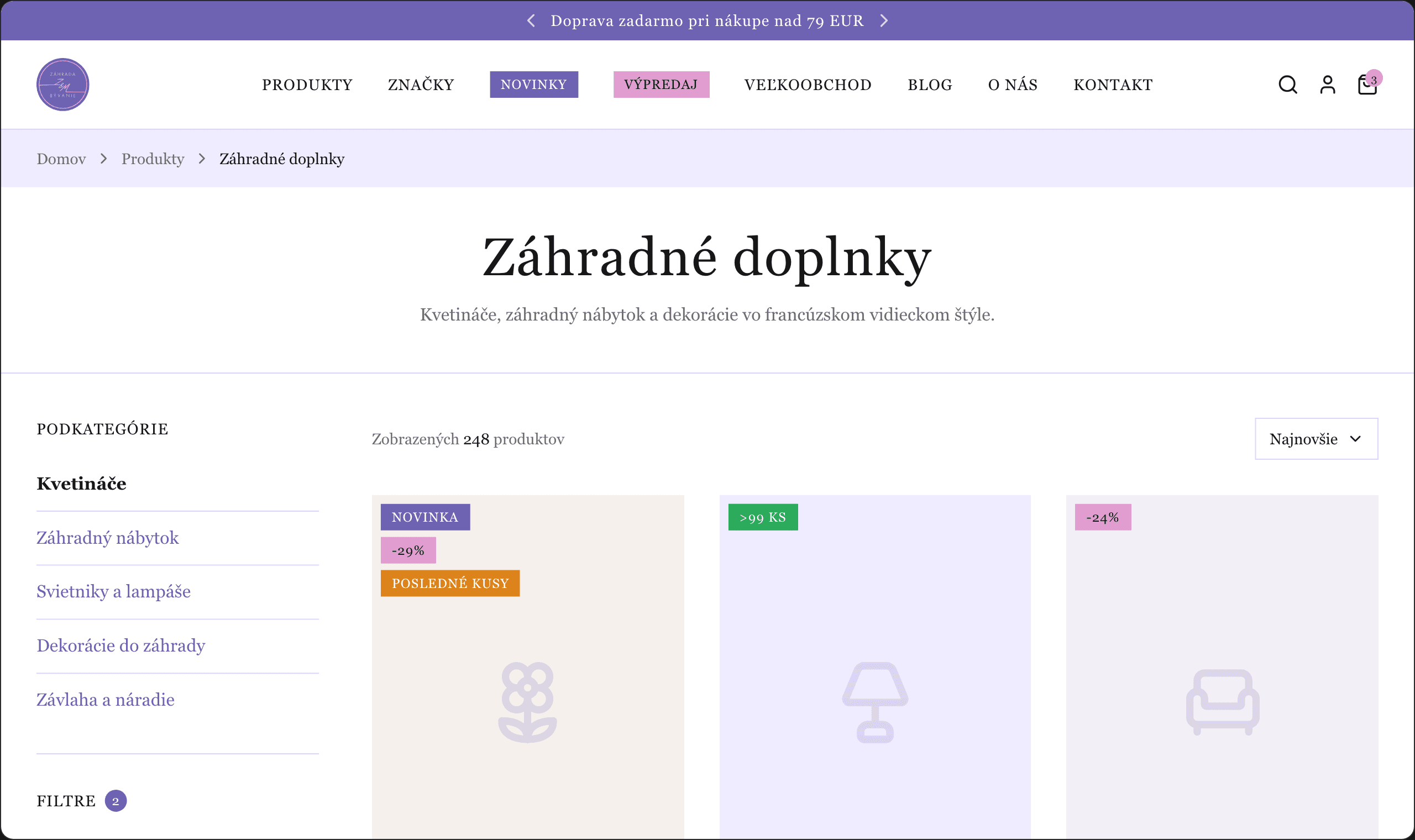
Záhradné sells garden furniture, planters and decorations in a French country style. The business had outgrown its rented e-commerce platform and moved to a custom system with its own administration, three stores on one backend and pricing that agrees with accounting.
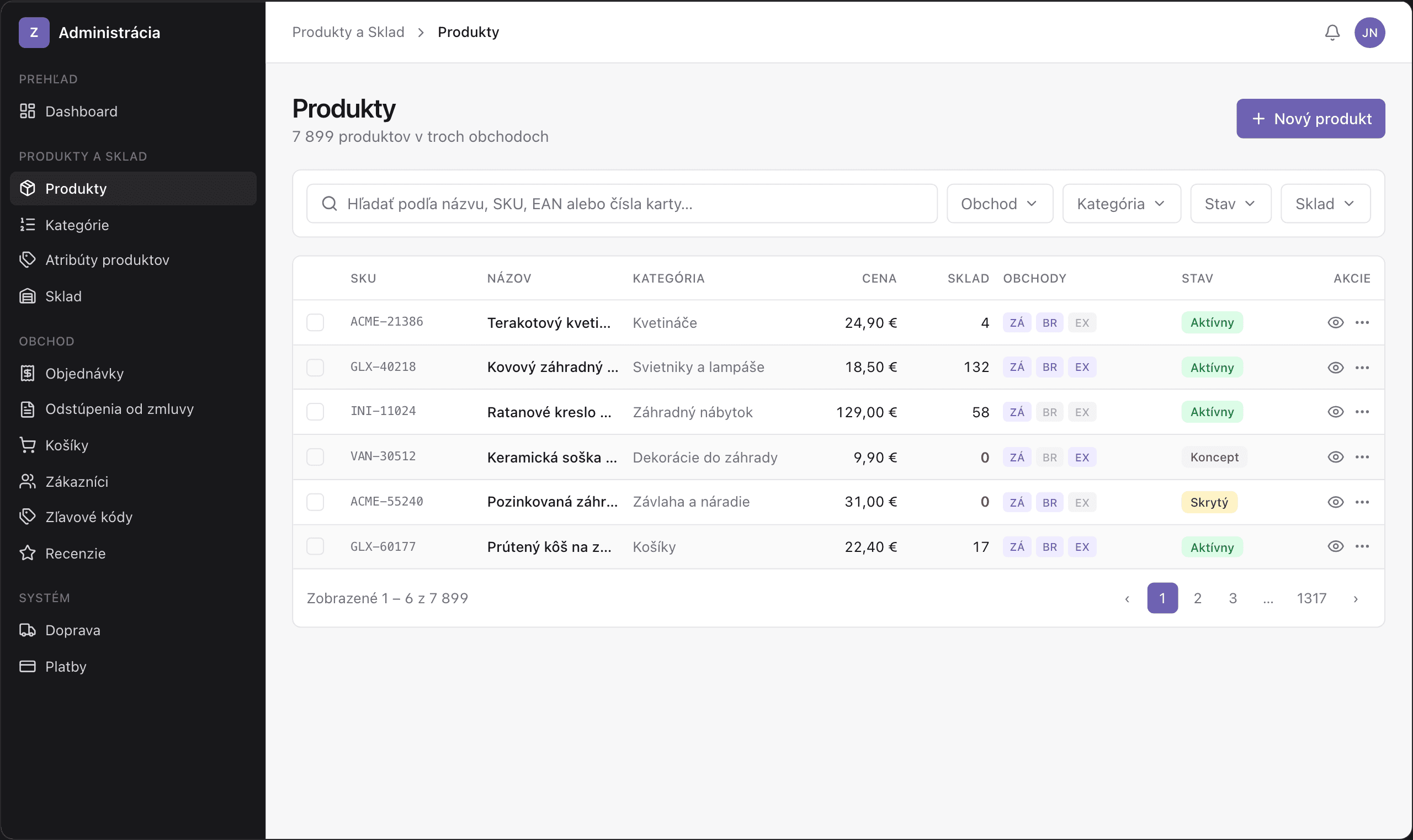
Products, categories, coupons and pricing rules are now managed once. Each record carries the list of stores it belongs to, so the same catalogue serves two retail brands and a wholesale store without being maintained three times.
02 / Challenge
The rented platform set the limits
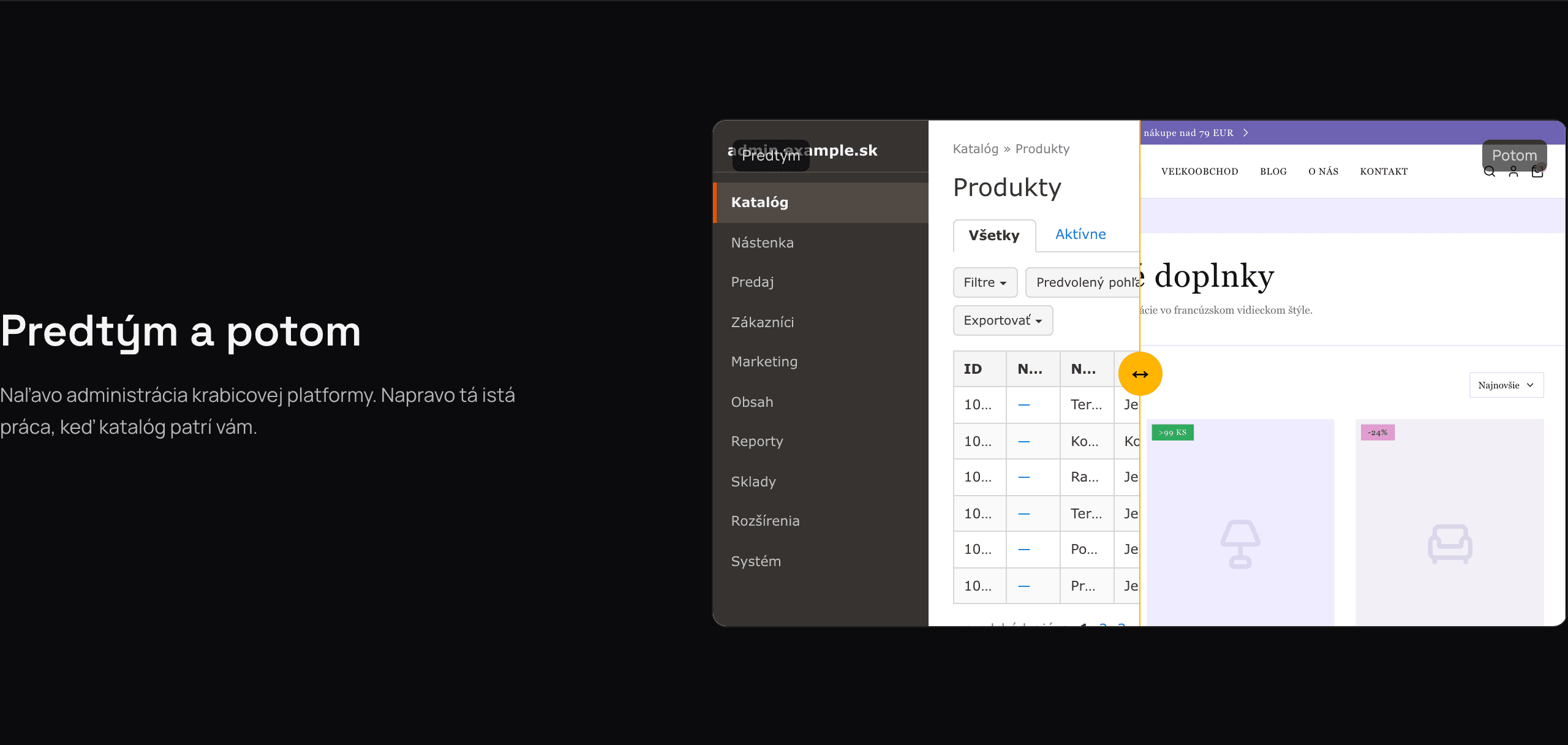
The boxed platform worked, but every requirement outside its standard feature set meant a third-party extension or a change that could break with the next update. The platform decided what the store was allowed to do.
Adding a second brand and wholesale sales would have meant a second and third installation, each with its own catalogue, its own price lists and its own administration. Three stores, and every piece of work done three times.
03 / Approach
One database, store-specific rules
The three stores share one catalogue while every product and commercial rule keeps store-level control. The wholesale store shows no prices to an anonymous visitor: pricing sits behind sign-in, and customer groups handle per-customer and per-product discounts with minimum quantities and validity periods. Above the catalogue, filters are counted on the server, so a value with no products behind it greys out instead of leading to an empty page, and the whole filter state lives in the URL, so a filtered view can be sent as a link. This case study stays within what BeCode has published; every screen shown here comes from that published product demo and uses synthetic brands and stock figures.
04 / Results
A migration without starting over
The catalogue moved together with categories, customers and order history. Orders now pass into accounting, invoices return to the order, and stock, point-of-sale and web pricing stay connected to the company's records.
7,899
Products migrated
The move preserved the catalogue together with categories, customers and order history.
03
Stores on one backend
Retail brands and a sign-in-only wholesale store share one database and administration.
04
Connected systems
Order, invoice, stock and point-of-sale workflows connect the store with the rest of the business.